How Long After a Car Accident Can Injuries Appear? Delayed Symptoms to Watch For
Home / How Long After a Car Accident Can Injuries Appear? Delayed Symptoms to Watch For
This page was written and reviewed by Michael J. Cefali, Esq. Attorney Cefali is a founding partner of Cefali & Cefali, APC, based in San Juan Capistrano, CA. He holds a Juris Doctor from Chapman University Fowler School of Law and a B.A. in Global Studies & Maritime Affairs from the California Maritime Academy. Widely recognized for his advocacy in personal injury law, he has secured multi-hundred-thousand-dollar settlements in motorcycle accidents, hit-and-runs, and red-light collision cases. He maintains a perfect 10.0 “Superb” rating on Avvo.
Beyond his legal practice, Mr. Cefali actively supports his community through the Rotary Club of San Juan Capistrano, contributes to housing and meal programs for those in need, and enjoys fishing and spending time with his rescue dogs.
The date below reflects when this page was last reviewed for accuracy. Please see our Editorial Guidelines.
Most car accident injuries start to cause symptoms within a few hours to a few days, but some take a week or longer to become clear. Whiplash pain often starts hours after the crash, concussion symptoms can surface days later, and lingering brain fog from a concussion usually shows up within the first 7 to 10 days.
Feeling fine at the scene does not mean you were not hurt. This guide covers when common crash injuries appear, how long normal soreness lasts, which symptoms need a doctor the same day, and how waiting to get treatment can affect an injury claim in California. It is general information, not medical advice, so any new or worsening symptom after a crash is worth a call to your doctor.
How long after a car accident can injuries appear?
Symptoms can start anywhere from a few hours to several days after a crash, and a few conditions take weeks to show their full effect. The timing depends on the injury. Soft tissue damage to the neck and back tends to stiffen overnight, while a brain injury may only become noticeable when you return to work or try to concentrate.
Part of the delay is how the body reacts to a collision. Swelling and inflammation build over the hours that follow, and the stress of a crash can keep people from noticing pain until they slow down at home. That is why many people feel worse on day two than they did on day one.
When common crash injuries usually show symptoms
Injury
When symptoms often appear
What to watch for
Whiplash and neck strain
Several hours to a few days after the crash (NHS, Mayo Clinic)
Neck pain and stiffness, headaches at the base of the skull, pain into the shoulders or arms
Usually within the first 7 to 10 days (Mayo Clinic)
Poor concentration and memory, headaches, sleep problems, irritability
Bruising, including deep bruises
Color and soreness change over several days (MedlinePlus)
Seat belt marks, bruises that spread or darken, a painful lump
Shoulder injuries
Often a day or more later, as stiffness builds
Pain lifting your arm, weakness, clicking or catching
Back and disc injuries
Often days later, once swelling and muscle guarding set in
Low back pain, pain down a leg, numbness or tingling
Emotional effects
Days to weeks after the crash
Trouble sleeping, flashbacks, anxiety about driving
Some symptoms should never wait for a regular appointment. Go to an emergency room or call 911 if you notice any of the following after a crash:
A headache that keeps getting worse, vomiting more than once, slurred speech, or pupils of different sizes
Confusion, unusual drowsiness, trouble waking up, or a seizure
Weakness or numbness in an arm or leg
Belly pain, a swollen or firm abdomen, or a dark bruise across the stomach from the seat belt
Dizziness or fainting, chest pain, or shortness of breath
The first two items come from the CDC list of brain injury danger signs. Abdominal and chest symptoms after a crash can signal internal bleeding, which needs emergency care even when the outside of the body looks fine.
How long should you be sore after a car accident?
Ordinary muscle soreness after a crash usually peaks in the first few days and improves steadily over one to a few weeks. Whiplash takes longer: most people feel better within a few weeks, the NHS says it usually gets better within 2 to 3 months, and Mayo Clinic notes that some people have pain for months or years.
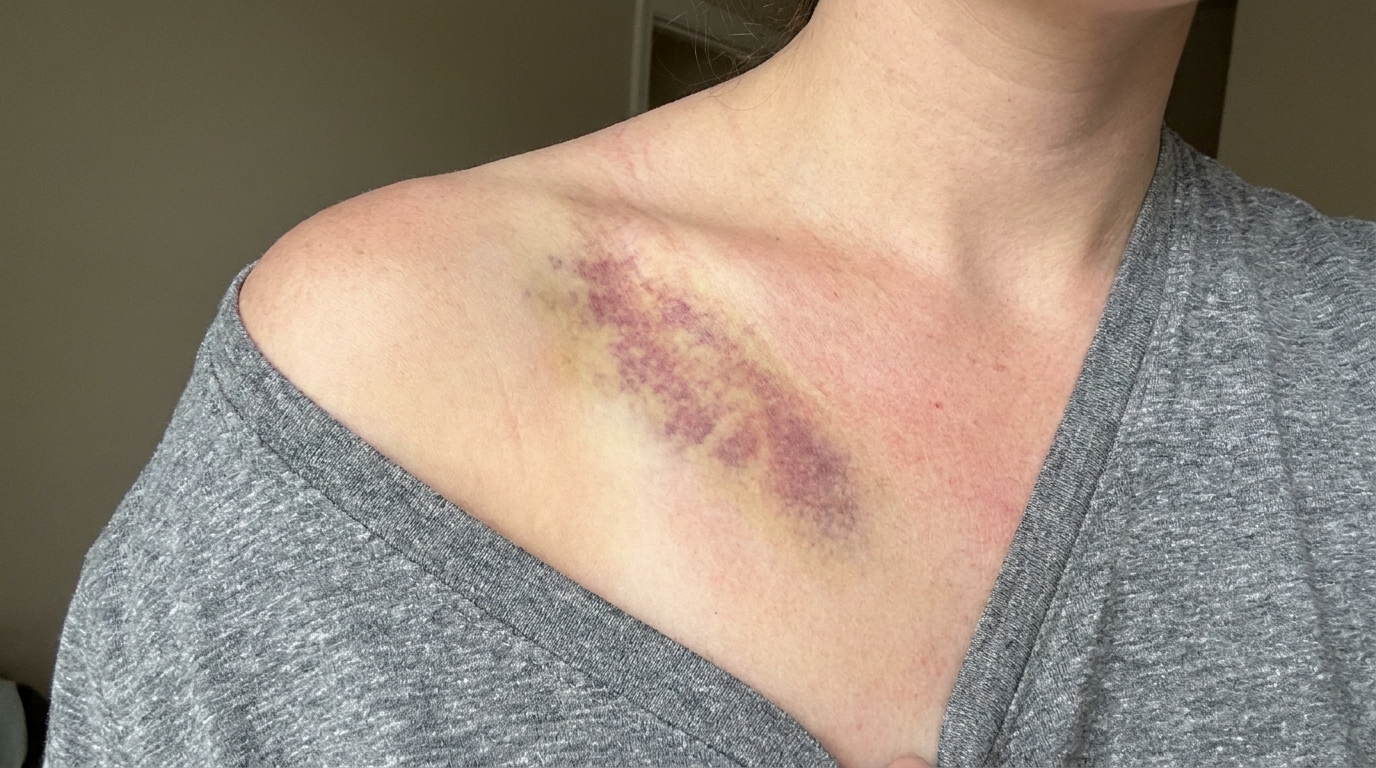
Bruises follow their own schedule. According to Cleveland Clinic, most bruises fade within two weeks, while severe bruising and deeper collections of blood can last a month or longer. MedlinePlus describes bruises moving from pinkish red to blue, then greenish yellow, before fading.
Soreness that follows the normal pattern gets a little better each day. Treat these as signs that something more than soreness is going on, and see a doctor:
Pain that is worse after the first week instead of better
Numbness, tingling or weakness that travels into an arm, hand, leg or foot
Pain that wakes you up at night or keeps you from sleeping
Stiffness that limits how far you can turn your head or bend
A bruise that keeps growing, feels hard, or causes extreme pressure in the area
Questions like "how long will I be sore after a car accident" do not have one answer for everyone. Age, the speed and direction of the impact, where you were sitting, and any earlier injuries all change the recovery time, which is why a medical exam matters more than any general timeline.
Which injuries show up later?
The injuries most likely to appear late are soft tissue injuries to the neck, shoulder and back, concussions, deep bruises, and the emotional effects of a crash. Each has its own warning signs, and several have their own detailed guides on our site.
Whiplash and neck injuries
Whiplash happens when the head snaps forward and back, straining the muscles and ligaments of the neck. Mayo Clinic lists neck pain and stiffness, headaches that begin where the skull meets the neck, tenderness in the shoulder or upper back, tingling in the arms, tiredness and dizziness as common symptoms. Our guide to a California whiplash claim explains how these injuries are documented and valued. Rarely, neck pain after a crash turns out to be a fracture, such as a C2 fracture, so severe neck pain should be imaged.
Concussion and brain fog after a car accident
Brain fog after a car accident, meaning slowed thinking, trouble focusing or forgetfulness, can be a sign of a concussion even if you never hit your head or lost consciousness. The CDC says some concussion symptoms may not appear for hours or days. When problems with concentration, memory, headaches or sleep continue, Mayo Clinic calls them persistent post-concussive symptoms; they usually start within 7 to 10 days and can last three months or more. Our article on concussion signs after a car accident covers the symptoms in more detail.
Delayed bruising after a car accident
Delayed bruising is common because blood from damaged vessels deep in muscle takes time to spread toward the skin. Seat belt and airbag marks often darken over the first days. A deep bruise in a muscle, such as the thigh, can make that muscle hard to use, and MedlinePlus warns that extreme pressure in a large, painful bruise needs care right away. A wide bruise across the lower belly from a lap belt deserves an emergency exam, since it can come with injuries to the organs underneath.
Shoulder pain
Bracing against the steering wheel or being thrown against a seat belt can injure the rotator cuff, the labrum or the collarbone. Pain often grows over a day or two as the joint stiffens. Our guide to shoulder pain after a car accident explains why it is often delayed and which tests confirm the injury.
Back pain and degenerative disc disease
Back injuries can take days to show up, especially when a crash strains muscles or worsens a disc that was already wearing down. Degenerative disc disease is very common, even in people with no pain: a 2015 review in the American Journal of Neuroradiology found disc degeneration on imaging in 37% of people with no symptoms at age 20 and 96% at age 80. That matters for a claim, because insurers often point to these findings to say the pain came from age, not the crash.
California law does not let them off the hook that easily. Under CACI No. 3927, the jury instruction on aggravation of a preexisting condition, an injured person cannot recover for a condition they already had, but must be compensated for the way the crash made that condition worse. CACI No. 3928 adds that a defendant is responsible for all of the harm even if the injured person was more susceptible to injury than a typical person. Records showing you had no back treatment before the crash and steady treatment after it are the strongest evidence in these cases.
Emotional effects
Anxiety about driving, nightmares, flashbacks and trouble sleeping often surface after the physical shock wears off. These reactions are real injuries and can be treated. Our article on the psychological effects of car accidents explains the common patterns and when to get help.
Does a gap in treatment hurt my claim?
It can. When there is a delay between the crash and your first doctor visit, or a long break in treatment, the insurance company will argue that your injury was minor, already healed, or caused by something else. A gap does not end your claim, but it gives the other side an argument you then have to answer with records and a clear explanation.
California law lets an injured person recover the amount that compensates for the harm the other driver caused (Civil Code section 3333). The defense can also argue you failed to take reasonable steps to limit your injuries, but under CACI No. 3930 the defendant has to prove that, and a jury considers whether your choices were reasonable given your circumstances, including cost and hardship. Waiting a few days because you thought the pain would pass, or missing appointments because you could not get time off work, is very different from abandoning care for months.
A few habits keep a gap from hurting you:
Get checked as soon as symptoms appear, even if that is days after the crash, and tell the doctor the symptoms started after the collision.
Describe every symptom at every visit, including headaches, sleep problems and trouble concentrating.
Follow the treatment plan, and if you must stop or delay care, ask the doctor to note why in your chart.
Keep a short daily log of pain levels, missed work and activities you could not do.
Save bills, prescriptions and appointment confirmations in one place.
The way treatment records connect your symptoms to the crash also affects what the claim is worth. Our guide to how pain and suffering damages are calculated explains why consistent records support a higher valuation.
What deadlines apply if symptoms show up later?
The legal deadlines usually start on the day of the crash, not the day you first noticed symptoms. A California injury lawsuit generally has to be on file no later than two years after the crash (Code of Civil Procedure section 335.1). When a public agency, for example a county road department or a city bus line, caused the crash, you get only six months to present your claim to it (Government Code section 911.2). Our guide to the California personal injury statute of limitations lists every deadline in one table.
Reporting duties come even sooner. When anyone is hurt, drivers have 10 days to send the DMV an SR-1 form (Vehicle Code section 16000), and most insurance policies require prompt notice. A person who felt fine at the scene but develops pain the next day was still injured in the crash, which is one more reason to report it and get examined quickly. Our reporting deadline guide covers each one.
What to do if symptoms appear days after the crash
See a doctor, urgent care or your primary care provider as soon as you notice symptoms, and go to the emergency room for any of the danger signs above.
Tell the provider about the crash, how your body moved, and when each symptom started.
Notify your insurance company that someone was hurt, and update the claim if you first reported it as damage only.
Hold off on giving a recorded statement to the at-fault driver's insurance company until a doctor has told you how badly you are hurt.
Photograph bruises and swelling every few days as they change.
Talk with a car accident lawyer before signing any release or accepting a quick settlement.
Delayed injuries are where insurers push back hardest, because the first records often say very little. Cefali & Cefali builds the link between the crash and later symptoms with treating doctors, imaging and records from before the collision. Michael J. Cefali and Courtney L.C. Cefali review car accident claims for free, and Michael has recovered more than $60 million for injured clients over his career. Call (949) 325-7790 for a free review, or read more on our Orange County car accident lawyer page. There is no fee unless we win.
Delayed injury FAQs
How long after a car accident can injuries appear?
Most injuries cause symptoms within a few hours to a few days. Whiplash often starts hours later, concussion symptoms can take hours or days, and lasting concussion problems usually appear within 7 to 10 days, so watch for new symptoms for at least two weeks.
How long should you be sore after a car accident?
Normal muscle soreness usually eases over one to a few weeks. Whiplash often takes 2 to 3 months to settle, and pain that gets worse after the first week, spreads into an arm or leg, or causes numbness should be checked by a doctor.
Which injuries show up later after a car accident?
Whiplash and other neck injuries, concussions, shoulder injuries, back and disc injuries, deep bruises, and emotional effects such as anxiety about driving are the injuries most likely to appear late.
Does a gap in treatment hurt my claim?
It can lower an offer, because insurers use gaps to argue the injury was minor or unrelated. A gap does not end a claim, and a short delay with a clear reason, documented in your medical records, is much easier to explain than months without care.
Is brain fog after a car accident a sign of a concussion?
Often, yes. Slowed thinking, poor focus and memory problems are common concussion symptoms, and they can appear even without a blow to the head. Persistent symptoms usually start within the first 7 to 10 days and should be evaluated.
Can a car accident make degenerative disc disease worse?
Yes. Disc degeneration is common with age, but a crash can turn a painless condition into a painful one. California jury instruction CACI No. 3927 allows compensation for the way an accident made an existing condition worse.
Michael Cefali is a dedicated accident attorney based in San Juan Capistrano, California, committed to securing justice and fair compensation for accident victims.
A graduate of Newport Harbor High School, he went on to earn his Bachelor’s degree in Global Studies and Maritime Affairs from the California Maritime Academy, followed by his Juris Doctor from Chapman University School of Law.
Deeply invested in his community, Michael is an active member of the Rotary Club of San Juan Capistrano, contributing to efforts that provide meals, housing, and support to those in need. Outside of his legal work and volunteer service, he enjoys fishing in Dana Point and spending time with his three rescue dogs—a Chihuahua, a Spaniel mix, and a Shepherd mix.
Driven by his strong belief in justice and fairness, Michael remains steadfast in advocating for individuals harmed by the negligence or inaction of others.