What to Do After a Bus Accident in California (Passengers and Drivers)
Home / What to Do After a Bus Accident in California (Passengers and Drivers)
This page was written and reviewed by Michael J. Cefali, Esq. Attorney Cefali is a founding partner of Cefali & Cefali, APC, based in San Juan Capistrano, CA. He holds a Juris Doctor from Chapman University Fowler School of Law and a B.A. in Global Studies & Maritime Affairs from the California Maritime Academy. Widely recognized for his advocacy in personal injury law, he has secured multi-hundred-thousand-dollar settlements in motorcycle accidents, hit-and-runs, and red-light collision cases. He maintains a perfect 10.0 “Superb” rating on Avvo.
Beyond his legal practice, Mr. Cefali actively supports his community through the Rotary Club of San Juan Capistrano, contributes to housing and meal programs for those in need, and enjoys fishing and spending time with his rescue dogs.
The date below reflects when this page was last reviewed for accuracy. Please see our Editorial Guidelines.
What to Do After a Bus Accident in California (Passengers and Drivers)
If you are in a bus accident, get yourself to safety, call 911, and get checked by a doctor the same day, even if you feel fine. Before you leave the scene, write down the bus number, route, and the name of the agency or company on the side of the bus, because a public transit bus starts a six-month deadline to file a written claim under Government Code section 911.2.
The rest depends on where you were: on the bus, in a car that collided with it, or on foot or a bike. This guide covers each of those situations, who to file with, and what to keep. For the stages after that and how long they take, see our bus accident lawsuit timeline. This is general information, not legal advice for a specific case.
What should I do if I'm in a bus accident?
Protect your health first, then preserve the facts that identify the bus and its operator. Those two things decide most of what happens next.
At the scene
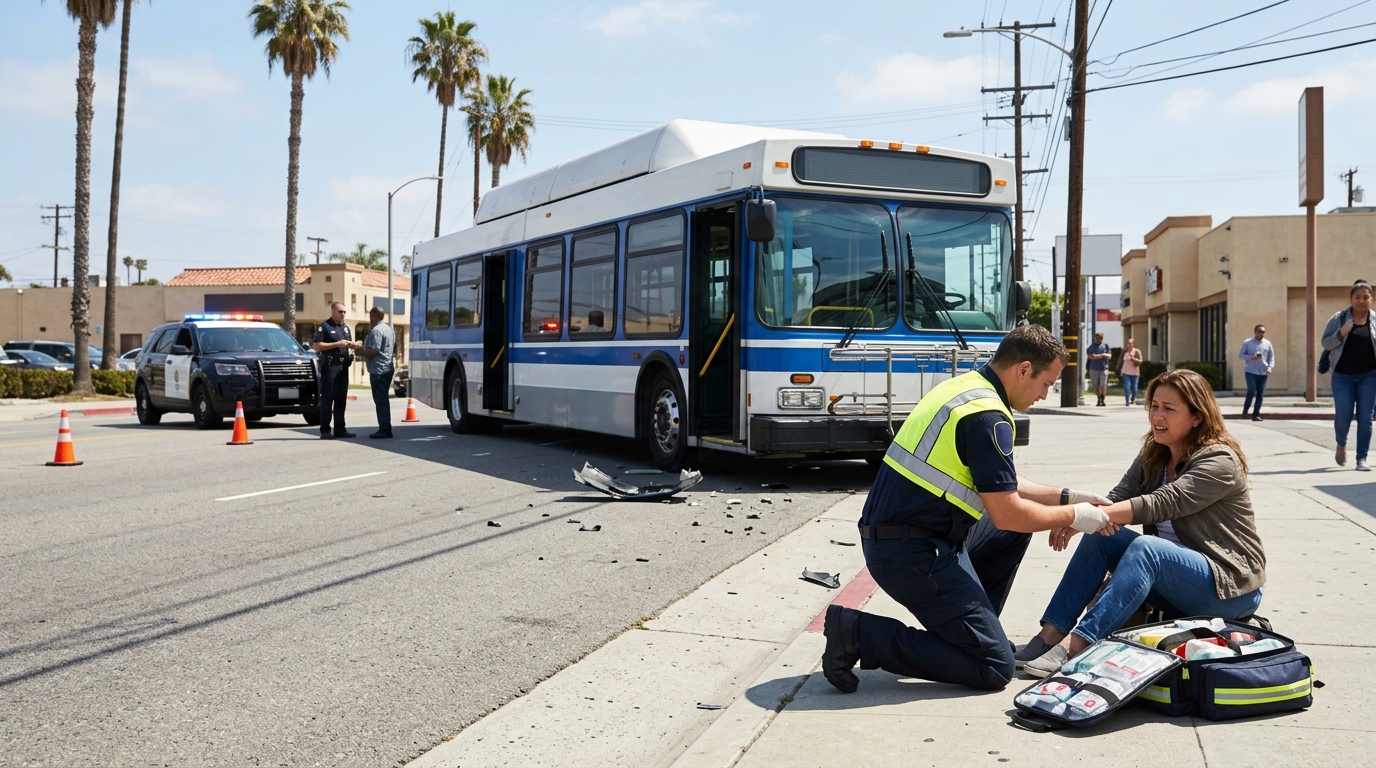
Move somewhere safe if you can do so without making an injury worse, and call 911. Ask for police to respond even if the bus driver says a supervisor is on the way.
Accept medical help or get checked as soon as possible. Head, neck, and back injuries from sudden stops and impacts often show up hours or days later.
Identify the bus. Photograph the bus number, route sign, license plate, and any "operated by" decal. Many transit agencies hire private companies to run routes, and the decal tells you who that is.
Get names. Note the bus driver's name or badge number, the responding officer's name and agency, and contact details for other passengers and witnesses.
Take photos of the vehicles, the inside of the bus if you were on it, your injuries, and the street, including traffic signals and skid marks.
Keep proof that you were on board, such as a transit card, mobile ticket, or receipt.
In the first days afterward
Follow up with a doctor and keep every record, bill, and prescription. Our guide to concussion symptoms after a crash lists signs that are easy to miss.
Get the report number from the police or CHP, and ask the agency or company for an incident report number as well.
Ask in writing for video to be saved. Most buses have interior and exterior cameras, and footage can be overwritten on a schedule. A short letter to the operator asking it to preserve the recordings protects that evidence.
Hold off on recorded statements to the bus company's or agency's insurer until you understand your injuries and your options.
Write down what you remember, including where you were sitting or standing and what the driver did just before the crash.
What if I crash into a bus?
Stop, call 911, and treat it like any serious collision: check for injuries, exchange information with the bus driver, and photograph everything. Do not argue about fault at the scene. Bus cameras and passenger witnesses usually show what happened, and fault is decided from that evidence, not from who hit whom.
Steps that matter when your car is involved:
Exchange information. Get the driver's name, the bus number, and the operator's name and insurance information. Transit drivers usually radio dispatch, and a field supervisor may come to the scene.
Report to the DMV. If anyone was hurt or damage passed $1,000, each driver must file an SR-1 within 10 days under Vehicle Code section 16000. Our SR-1 form guide explains how.
Notify your own insurer promptly with the basic facts. If passengers on the bus claim injuries and you may share fault, your liability coverage is what responds to those claims, so your insurer needs to know early.
If the bus driver caused the crash, your injury and vehicle claims go against the bus operator. When the operator is a public agency, the six-month government claim deadline applies to you too.
If a bus hit you while walking or riding a bike
Call 911 and get medical care first; pedestrians and cyclists hit by a bus are often more badly hurt than they realize at the scene. Then follow the same steps: identify the bus and operator, photograph the scene, find witnesses, and ask for the video to be preserved. If you have auto insurance, check whether its medical payments or uninsured motorist coverage applies to you as a pedestrian. Our guide on what to do if you are hit by a car while walking covers more of the pedestrian side.
What if I was a passenger?
Passengers usually have the strongest claims in a bus accident, because they rarely share any fault and the law holds bus operators to a high standard of care toward the people they carry. Civil Code section 2100 requires anyone who carries passengers for pay to use the utmost care and diligence in getting each rider safely to the stop.
That duty covers more than collisions. Passengers are also injured by:
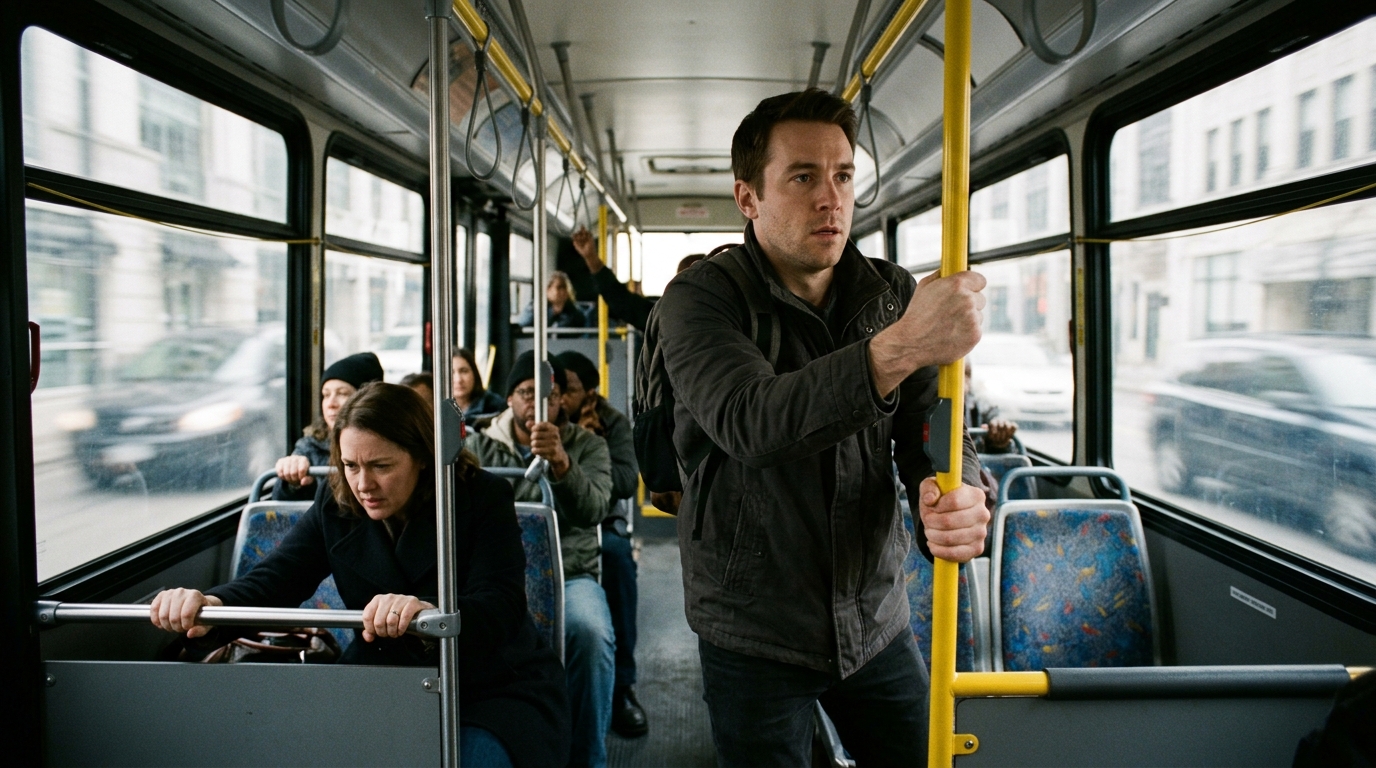
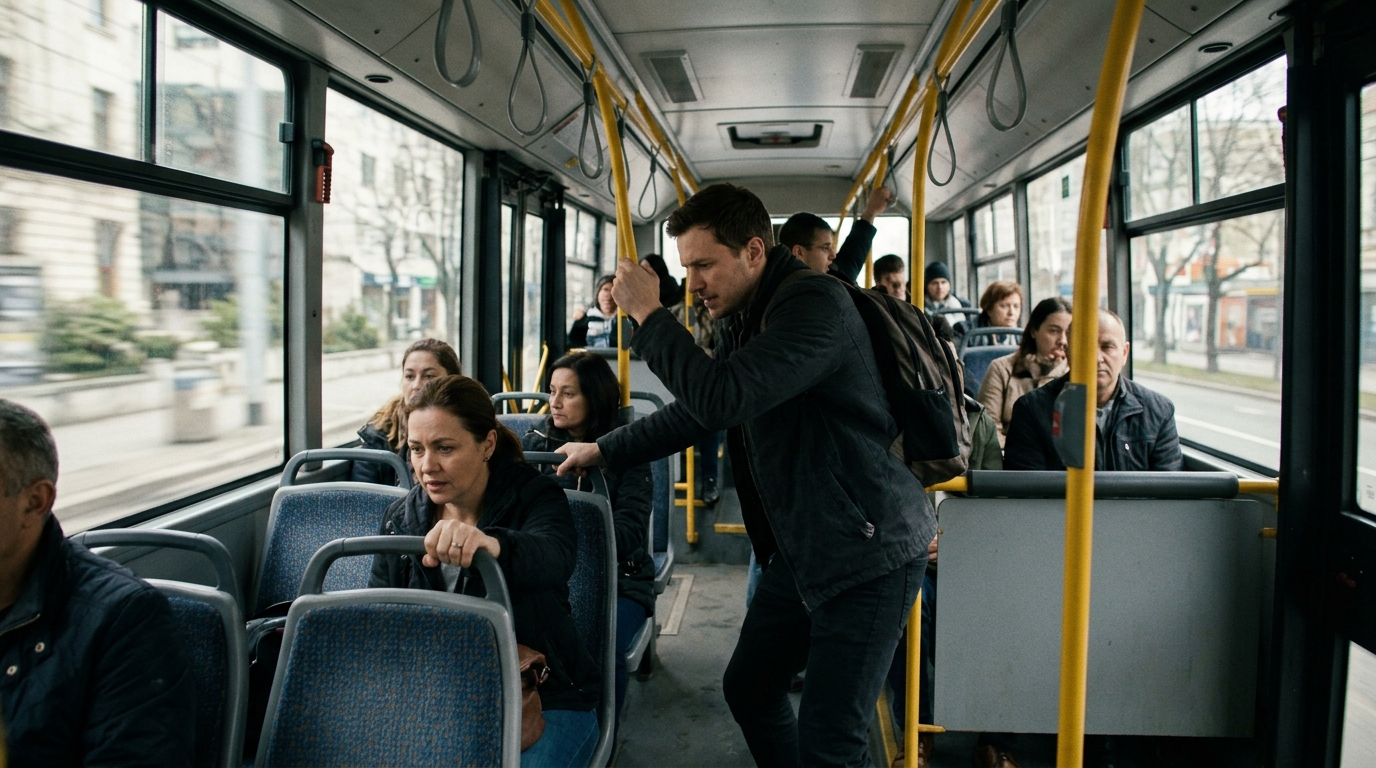
Sudden stops and sharp turns that throw standing or seated riders.
Falls while boarding or leaving, including a bus pulling away before a rider is seated or safely off.
Doors closing on a rider or a lift or ramp that fails.
Crashes caused by another driver, where the passenger may have claims against both that driver and the bus operator if the bus driver also contributed.
Keep in mind who ran the bus. A city or county transit agency, a school district, a private contractor running routes for an agency, a charter or tour company, an airport or hotel shuttle, and an employer shuttle all follow different claim rules, covered in the next section. Interstate charter and tour buses that seat 16 or more people must carry at least $5 million in liability coverage under federal rules (49 CFR 387.33), which matters when many passengers are hurt at once.
Who do I file with?
File with whoever operated the bus. For a public bus, that means a written government claim to the agency, usually through its claims office or the clerk of its governing board, within six months. For a private bus company, it means an injury claim with the company's liability insurer, and a lawsuit generally must be filed within two years, per Code of Civil Procedure section 335.1.
Who ran the bus
Where to file
Main deadline
City, county, or regional transit agency (for example OCTA, LA Metro, Riverside Transit Agency, County Connection)
Written government claim on the agency's claim form
6 months (Gov. Code 911.2)
School district or county office of education
Written government claim with the district
6 months
Private contractor running routes for an agency
Government claim with the agency and an injury claim with the contractor's insurer
6 months for the agency; 2 years for the contractor
Charter, tour, intercity, airport, or hotel shuttle company
Injury claim with the company's liability insurer
2 years to sue (Code Civ. Proc. 335.1)
Another driver who caused the crash
Claim with that driver's auto insurer
2 years to sue
A government claim has to include specific information, including your name and address, the date and place of the accident, a description of the injury, and the names of any agency employees involved, as listed in Government Code section 910. The agency then generally has 45 days to respond, and if it rejects the claim, a separate six-month window to file a lawsuit begins. Who may be liable is covered in our bus collision guide, and each stage after the claim is laid out in the bus accident lawsuit timeline.
Your own insurance may also help while the claim is pending. If you were in your car, medical payments coverage and collision coverage can pay early bills and repairs, and uninsured or underinsured motorist coverage can apply if the at-fault driver lacks enough insurance.
Frequently asked questions
What should I do if I'm in a bus accident?
Get to safety, call 911, and see a doctor the same day. Before leaving, record the bus number, route, operator name, and witness contacts, and keep proof you were on board.
What if I crash into a bus?
Stop, call 911, exchange information with the bus driver, photograph the scene, report the crash to the DMV on an SR-1 within 10 days when someone was injured or damage topped $1,000, and notify your insurer. Fault is decided by the evidence, including bus video.
What if I was a passenger?
Passengers rarely share fault, and California holds carriers to the utmost care for their passengers under Civil Code section 2100. You may have a claim for injuries from a crash, a sudden stop, or a fall while boarding.
Who do I file with?
File with whoever operated the bus. A public transit agency or school district needs a written government claim within six months; a private bus company's insurer handles the claim, with two years to sue.
What if I got hit by a bus while walking?
Get medical care first, then identify the bus and operator, photograph the scene, find witnesses, and ask that the bus video be preserved. If a public agency ran the bus, the six-month claim deadline applies.
Hurt in a bus accident? Get the claim filed with the right agency
Bus claims often go wrong at the first step: the wrong agency, a missing detail on the claim form, or a deadline that passes during recovery. Cefali & Cefali reviews bus accident claims for free, and our fee comes only from a recovery. Reach us at (949) 325-7790 or send us a message online. We help passengers, drivers, and pedestrians in Orange, Riverside, and Contra Costa counties.
Michael Cefali is a dedicated accident attorney based in San Juan Capistrano, California, committed to securing justice and fair compensation for accident victims.
A graduate of Newport Harbor High School, he went on to earn his Bachelor’s degree in Global Studies and Maritime Affairs from the California Maritime Academy, followed by his Juris Doctor from Chapman University School of Law.
Deeply invested in his community, Michael is an active member of the Rotary Club of San Juan Capistrano, contributing to efforts that provide meals, housing, and support to those in need. Outside of his legal work and volunteer service, he enjoys fishing in Dana Point and spending time with his three rescue dogs—a Chihuahua, a Spaniel mix, and a Shepherd mix.
Driven by his strong belief in justice and fairness, Michael remains steadfast in advocating for individuals harmed by the negligence or inaction of others.
Search Our Site
Schedule Your FREE Consultation
"*" indicates required fields
Practice Areas
Follow Us
Why Choose Cefali & Cefali Personal Injury Lawyers
We litigate and the insurance companies know it.
Unparalleled client communication leads to better results.
Down to earth attorneys who listen and care.
We get great results.
We have a fantastic team of paralegals and other friendly support staff.
We take the tough cases other firms reject.
No out of pocket - no win no charge.
100% free consultation
Contact Us Today
Start your no-obligation consultation with us by filling out the form below and we will contact you about your case within 24 hours.