Car Accident Without Insurance in California: What Happens If You Were Uninsured
Home / Car Accident Without Insurance in California: What Happens If You Were Uninsured
This page was written and reviewed by Michael J. Cefali, Esq. Attorney Cefali is a founding partner of Cefali & Cefali, APC, based in San Juan Capistrano, CA. He holds a Juris Doctor from Chapman University Fowler School of Law and a B.A. in Global Studies & Maritime Affairs from the California Maritime Academy. Widely recognized for his advocacy in personal injury law, he has secured multi-hundred-thousand-dollar settlements in motorcycle accidents, hit-and-runs, and red-light collision cases. He maintains a perfect 10.0 “Superb” rating on Avvo.
Beyond his legal practice, Mr. Cefali actively supports his community through the Rotary Club of San Juan Capistrano, contributes to housing and meal programs for those in need, and enjoys fishing and spending time with his rescue dogs.
The date below reflects when this page was last reviewed for accuracy. Please see our Editorial Guidelines.
Car Accident Without Insurance in California: What Happens If You Were Uninsured
If you were in a car accident without insurance in California, you can still claim your medical bills, lost wages and car repairs from a driver who caused the crash, but Civil Code section 3333.4 (Proposition 213) usually stops you from recovering anything for pain and suffering. You should also expect the DMV to suspend your license for at least a year if the crash had to be reported, and if you caused it, you are personally responsible for the other people's losses.
This guide is for drivers who had no coverage of their own at the time of the crash. If you were insured and the other driver was not, read our guide to what happens when the at-fault driver has no insurance instead. Either way, this is general information, and the right next step depends on the facts of your crash.
What happens if I get in an accident without insurance?
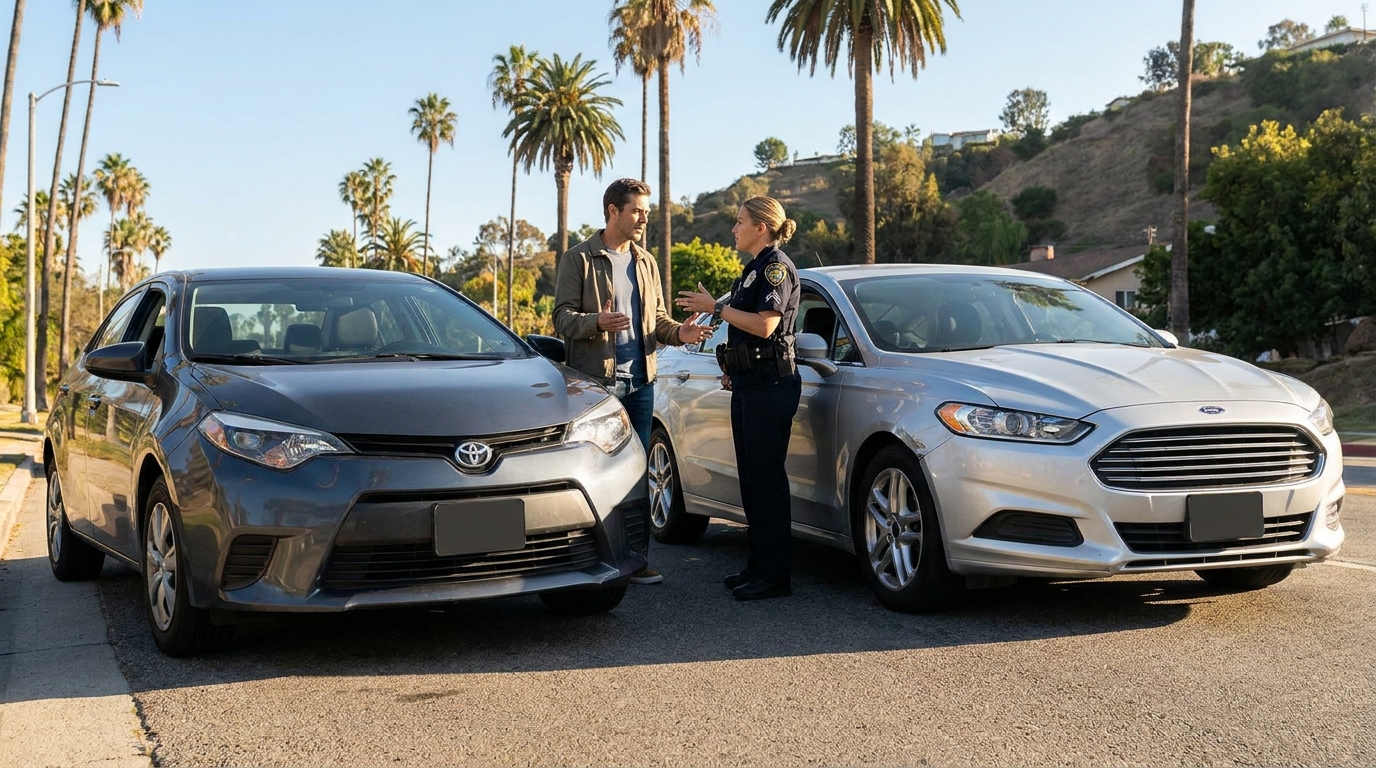
What happens next depends mostly on who caused the crash. An uninsured driver who was not at fault can still bring a claim against the driver who was, while an uninsured driver who caused the crash has no insurer to pay the other side, so the claim lands on them personally. In both cases the DMV process for uninsured drivers applies.
Your situation
Money you can recover
Money you may owe
License
Uninsured, the other driver caused the crash
Medical bills, lost income, car repairs; usually no pain and suffering (Prop 213)
Nothing to the other driver; your own medical bills until the claim pays
Suspension risk if the crash was reportable
Uninsured, you caused the crash
Nothing from the other driver
Their injuries and property damage, paid from your own pocket
Suspension under VC 16070, plus a second suspension if a court judgment goes unpaid
Uninsured, fault is shared
Your economic losses, reduced by your share of fault
Your share of the other driver's losses
Same as above
California uses pure comparative fault, so a shared-fault crash is split by percentage rather than all or nothing. Our article on whether California is a no-fault state explains how adjusters assign those percentages.
What to do in the first days after the crash
Stay at the scene and exchange information. Leaving can turn a civil problem into a hit-and-run charge. Give your name, address and license, and be honest that you have no insurance. Showing a fake or lapsed insurance card makes things much worse.
Call the police if anyone is hurt and ask for the report number. A neutral report is often the best evidence that the other driver caused the crash.
Get medical care right away. Being uninsured does not change how injuries should be treated, and records made the same day tie your injuries to the crash. Use your health insurance or Medi-Cal if you have it.
Complete the DMV's SR-1 report within 10 days when it injured or killed someone or caused more than $1,000 in damage to any one person's property. Vehicle Code section 16000 requires the report whether or not you were at fault or insured. Our SR-1 form guide walks through it.
Do not give a recorded statement or sign anything for the other side's adjuster until you understand how Prop 213 affects your claim.
Keep every bill and pay stub. Your claim will be built almost entirely on documented costs, so receipts matter more than usual.
If the other driver caused the crash
You file a third-party claim against the other driver's liability policy, just as an insured driver would. That insurer must pay your economic losses, such as medical bills, lost wages and the cost of repairing or replacing your car, up to its policy limits. What it can refuse to pay, because of Prop 213, is the non-economic part of the claim, which is often the largest part for an injured person.
If you caused the crash
There is no insurance company to defend you or pay the other driver, so their medical bills, lost wages and repair costs become your personal debt. Usually the other driver's own insurer pays them first and then comes after you for reimbursement, which is called subrogation; our guide to the subrogation letter after a car accident explains what that demand looks like and how people negotiate it.
If the other side sues and wins, a court judgment can lead to wage garnishment and bank levies. And under Vehicle Code section 16370, the DMV suspends the license of anyone who leaves a car accident judgment unpaid for 30 days. That suspension is separate from the one for having no insurance.
Can I still sue if I was uninsured?
Yes. Driving without insurance does not take away your right to sue the driver who hit you, but Prop 213 limits what you can collect: in most cases you can recover economic damages and not non-economic damages.
Voters passed Proposition 213, the Personal Responsibility Act of 1996, and it became Civil Code section 3333.4. In any case arising from the operation or use of a motor vehicle, it bars an injured person from recovering compensation for "pain, suffering, inconvenience, physical impairment, disfigurement, and other nonpecuniary damages" if that person was the uninsured owner of a vehicle involved in the crash, or was driving and cannot show the required financial responsibility. The same bar applies to a driver convicted of DUI for that crash.
Type of damages
Can an uninsured driver recover it?
Past and future medical bills
Yes
Lost wages and lost earning capacity
Yes
Car repairs or the value of a totaled car
Yes
Other out-of-pocket costs, such as rental cars or home care
Yes
Pain and suffering, emotional distress, scarring or disfigurement, lost enjoyment of life
The rule is narrower than many insurance adjusters suggest. It is worth checking whether one of these situations fits your crash:
You were a passenger, not the owner or driver. Section 3333.4 applies to an injured person who owned an uninsured vehicle in the crash or was driving without proof of financial responsibility. A passenger who did not own the car is not covered by that wording.
You were walking or riding a bike. The owner bar applies when your uninsured vehicle was "involved in the accident". If you were hit as a pedestrian or cyclist, your uninsured car parked at home is not part of the crash.
The other driver was convicted of DUI. Under section 3333.4(c), an uninsured vehicle owner injured by a driver convicted of DUI for that crash can still recover non-economic damages.
You actually had coverage. The bar applies only when the vehicle was not insured as the financial responsibility laws require. If a policy was in force but you could not show the card at the scene, proving that coverage later removes the problem.
Courts have applied the rule broadly where it does fit. The California Supreme Court held that it applies to a product liability claim against a car manufacturer (Hodges v. Superior Court (1999) 21 Cal.4th 109) and to a wrongful death claim brought by the family of an uninsured driver (Horwich v. Superior Court (1999) 21 Cal.4th 272).
Your filing deadlines do not change because you were uninsured. Most people get two years to sue over their injuries and three years to sue over a damaged car; our California statute of limitations guide covers the exceptions.
Will my license be suspended?
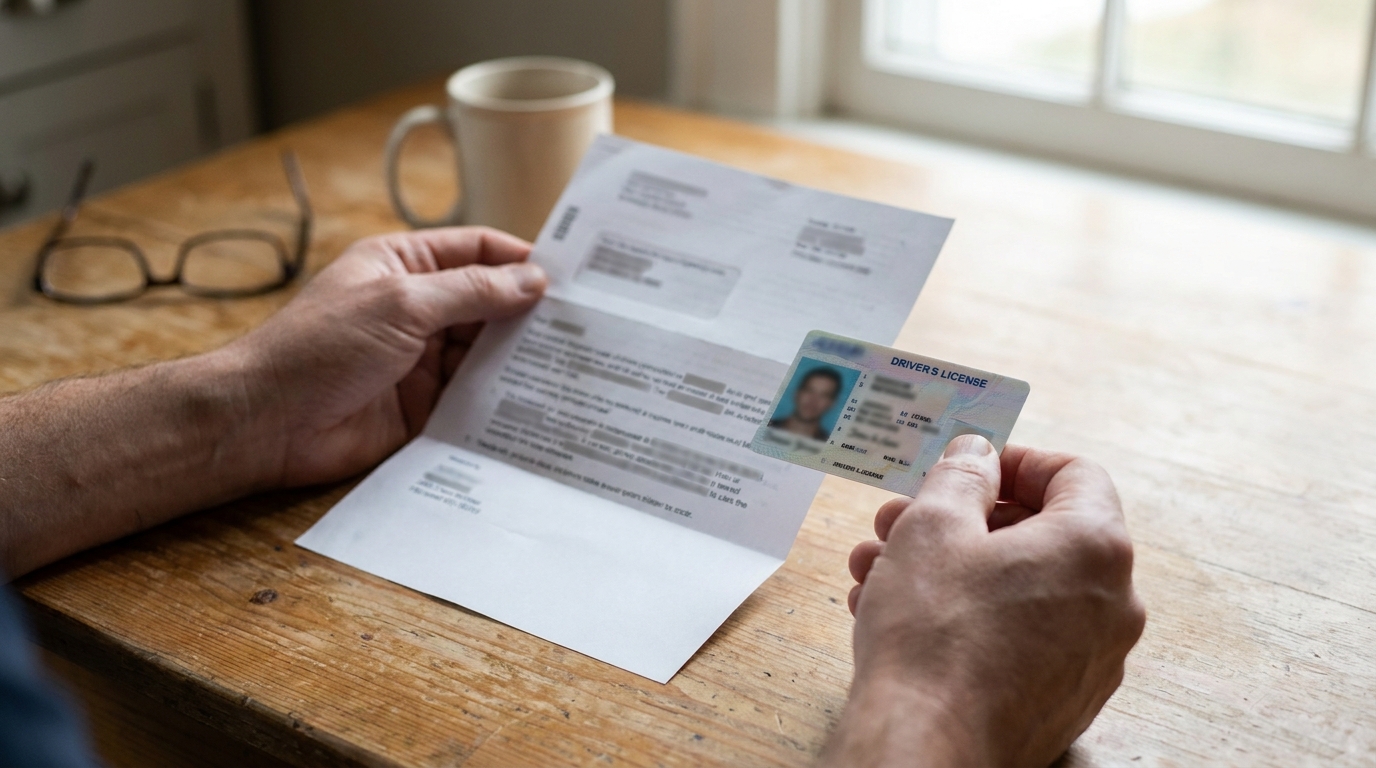
Usually yes, if the crash was serious enough to require an SR-1 report. Under Vehicle Code section 16070, when a driver in a reportable accident cannot show the financial responsibility required by Vehicle Code section 16020, the DMV must suspend that person's driving privilege, regardless of who caused the crash.
Here is how the process works:
The DMV receives the accident report. Your SR-1, or the other driver's, shows that you had no insurance.
You get a notice of intent to suspend. The suspension takes effect 30 days after the DMV mails it, unless you prove you were insured on the date of the collision. You also have the right to request a hearing under Vehicle Code section 16075.
The suspension lasts at least one year. Under Vehicle Code section 16072, it does not end until a year has passed and you file proof of financial responsibility, usually an SR-22 certificate from an insurer. You then have to keep that proof on file for three years, or the suspension comes back.
A restricted license may be possible. Section 16072 lets the DMV restrict your license instead of suspending it if you file and keep an SR-22 and pay a $250 penalty fee. The restricted license allows driving to and from work, driving required for your job, and taking a dependent child to school when no public transportation or school bus is available.
Do not skip the SR-1 to avoid this. Under Vehicle Code section 16004, failing to file a required accident report brings its own suspension, and the other driver will usually report the crash anyway. Expect your premiums to rise when you buy coverage again; our article on how much car insurance goes up after an accident explains why.
Penalties for driving without insurance in California
Even without a crash, driving without insurance is illegal in California. Every driver and owner must be able to show financial responsibility at all times and keep proof in the car under Vehicle Code section 16020, and a police officer can ask for it at a traffic stop or at an accident scene.
Fines. Under Vehicle Code section 16029, a first conviction carries a fine of $100 to $200, and a second within three years carries $200 to $500. Penalty assessments are added on top, which can make the total several times the base fine.
Impound. The same section lets a court order the uninsured vehicle impounded for good cause.
Minimum coverage. Any policy issued or renewed since January 1, 2025 must carry at least $30,000 of injury coverage for one person, $60,000 for everyone hurt in one crash, and $15,000 for property damage (Vehicle Code section 16056).
If cost is the reason you were uninsured, check whether you qualify for the state's California Low Cost Auto Insurance Program, which offers liability coverage that meets the legal requirement for income-eligible drivers. A policy bought after the crash will not cover the crash, but it is what the DMV will need before it lets you drive again.
Uninsured Driver Accident FAQs
What happens if I get in an accident without insurance in California?
If the other driver caused the crash, you can still claim your medical bills, lost wages and car repairs from their insurer, but Civil Code section 3333.4 (Prop 213) usually bars pain and suffering. If you caused it, you are personally responsible for the other side's losses. Either way, an SR-1 report must reach the DMV no more than 10 days later whenever someone was hurt or one person's property damage tops $1,000, and the DMV will usually suspend your license.
Can I still sue if I was uninsured?
Yes. You can sue the driver who caused the crash for economic damages such as medical bills, lost wages and property damage. Prop 213 generally bars uninsured owners and drivers from recovering non-economic damages like pain and suffering, with exceptions for passengers who did not own the car, pedestrians and cyclists whose uninsured car was not involved, and uninsured owners hit by a driver convicted of DUI.
Will my license be suspended for a car accident without insurance?
Usually, if the crash had to be reported to the DMV. Under Vehicle Code section 16070, the DMV suspends the license of a driver in a reportable accident who cannot show proof of insurance, starting 30 days after it mails a notice. The suspension lasts at least one year, and you must then file an SR-22 and keep it for three years. A restricted license for work or school driving may be available if you file an SR-22 and pay a $250 fee.
Can a passenger in an uninsured car get pain and suffering damages?
Generally yes. Civil Code section 3333.4 applies to an injured person who owned the uninsured vehicle or was driving it without proof of financial responsibility. A passenger who did not own the car is not covered by that bar.
What is the fine for driving without insurance in California?
Under Vehicle Code section 16029, a first conviction carries a fine of $100 to $200 plus penalty assessments, and a second conviction within three years carries $200 to $500 plus penalty assessments. A court may also order the vehicle impounded.
Talk with a California car accident lawyer
Being uninsured when someone else causes your crash does not mean you have no claim. The economic side of the claim is still yours to recover, and the exceptions to Prop 213 are worth checking with someone who handles these cases. Michael J. Cefali and Courtney L. C. Cefali represent injured drivers and passengers across Orange County and Northern California from our San Juan Capistrano and Pleasant Hill offices. Michael has recovered more than $60 million for injured clients.
Call (949) 325-7790 for a free consultation. You pay no attorney fees unless we recover money for you.
Michael J. Cefali is a California personal injury attorney with offices in San Juan Capistrano and Pleasant Hill. He has recovered more than $60 million for injured clients.
A graduate of Newport Harbor High School, he went on to earn his Bachelor’s degree in Global Studies and Maritime Affairs from the California Maritime Academy, followed by his Juris Doctor from Chapman University School of Law.
Deeply invested in his community, Michael is an active member of the Rotary Club of San Juan Capistrano, contributing to efforts that provide meals, housing, and support to those in need. Outside of his legal work and volunteer service, he enjoys fishing in Dana Point and spending time with his three rescue dogs: a Chihuahua, a Spaniel mix, and a Shepherd mix.
Driven by his strong belief in justice and fairness, Michael remains steadfast in advocating for individuals harmed by the negligence or inaction of others.
Search Our Site
Schedule Your FREE Consultation
"*" indicates required fields
Practice Areas
Follow Us
Why Choose Cefali & Cefali Personal Injury Lawyers
We litigate and the insurance companies know it.
Unparalleled client communication leads to better results.
Down to earth attorneys who listen and care.
We get great results.
We have a fantastic team of paralegals and other friendly support staff.
We take the tough cases other firms reject.
No out of pocket - no win no charge.
100% free consultation
Contact Us Today
Start your no-obligation consultation with us by filling out the form below and we will contact you about your case within 24 hours.